

















Decision framework for loyalty leaders comparing a saved pass, responsive web, and an app.
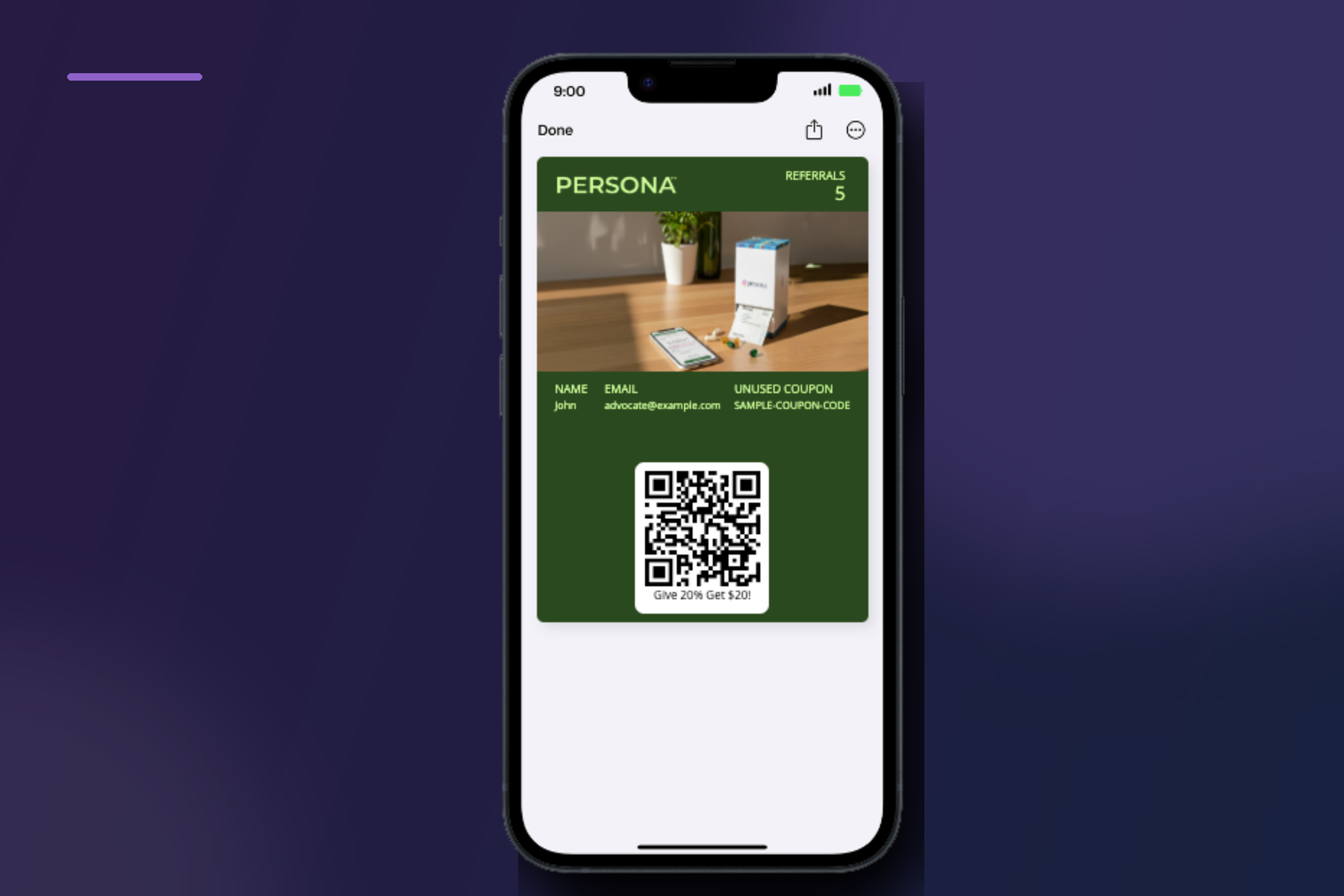
The decision is not Wallet pass versus app in the abstract
A loyalty team should not choose a mobile app or Wallet pass by asking which channel is more modern. The useful question is what the customer must do, how often they do it, and what operating commitment the brand can sustain. A pass is a lightweight saved object. A mobile app is a broader product experience that can support richer navigation, account features, content, and interactions. Neither is automatically better for loyalty.
If the customer needs a scannable member identifier and an occasional current offer, a pass may cover the job with less surface area. If the customer needs browsing, order management, personalized tools, or frequent two-way interactions, an app may be justified. Many brands will use both, but that is not a reason to duplicate every screen in each place.
Compare the customer jobs, not the channel labels
List the jobs loyalty members have today: identify themselves at checkout, find a current reward, understand program rules, review activity, make a purchase, locate a store, or get help. Then ask which jobs need depth and which need speed. A pass can be strong for glanceable identity and status. A web account can be strong for detailed history and explanations. An app can earn its place where repeat interaction benefits from a dedicated environment.
Do not treat a download as a loyalty milestone by itself. A customer may not want another app for a program they use twice a year. Conversely, a customer who uses a service weekly may want more than a pass can reasonably provide. Usage context should lead the decision, not a desire to own a particular interface.
Understand the capability and maintenance tradeoff
A Wallet pass can present defined fields and link customers to deeper destinations. It still needs branding, data integration, update rules, QA, and support. It is not zero-maintenance. A mobile app adds a larger product footprint: release planning, account sessions, device compatibility, store review processes, analytics governance, and a reason for customers to keep it installed. Those costs may be worthwhile, but they should be named.
Consider the web experience too. If the loyalty account page is hard to use on a phone, adding a pass or an app will not resolve every point of confusion. A clean relationship might be: pass for quick status or identification, responsive web for account management, and app only for tasks that benefit from persistent product functionality.
Use a pass when immediacy is the main requirement
A pass is well suited to a narrow loyalty promise: “Here is your member identifier and the benefit you can use now.” The customer does not need to remember a URL, navigate a menu, or install a full app just to access that information. Save invitations work best after a customer sees that promise in context, such as account enrollment, an in-store signup, or a confirmed reward.
The pass should not be stuffed with every tier, challenge, catalog, and campaign. A link can take customers to full detail. Give the pass a stable role and make the text readable at a glance. The purpose is convenience, not a second loyalty portal.
Use an app when the ongoing product experience earns it
An app is more plausible when it solves recurring jobs that are hard to perform in a pass or mobile browser. That might include order tracking, personalized product use, saved preferences, location-aware service, or account controls. These are examples, not a checklist. The evidence should come from actual customer behavior, research, and support patterns.
When a brand has an app, the loyalty pass can still play a supporting role. It can provide a simple membership identifier or offer snapshot that routes to the app or web when detail is needed. Avoid forcing customers into an app merely to view a reward they could reasonably see in a pass. Friction should be justified by a task that needs the app.
Create one source of truth across surfaces
The most common customer problem is not whether a program has an app. It is seeing different balances, terms, or eligibility states in different places. Establish which system owns membership, points or credits, tier, offers, and transaction history. Define how updates reach each surface and how quickly. Customer support needs a view of the same states, otherwise every question becomes a manual investigation.
Content ownership matters as well. The team that changes an offer needs to know what appears in email, web, app, and pass. Write concise channel rules so that a short pass label does not accidentally change the legal meaning of a longer web explanation. Consistency is a design requirement, not just a copy edit.
Choose with a small experiment and clear exit criteria
Instead of funding a broad build based on preference, run a limited test around one loyalty job. Invite a defined group to save a pass that contains their verified member ID and one relevant status. Watch save completion, use where measurable, support questions, and any effect on the next intended customer action. For an app investment, test the recurring job and expected return behavior with research or a narrowly scoped product release.
Set a decision date and a standard for continuation. The outcome might be to expand the pass, improve the web flow, invest in an app feature, or stop. That is a useful result. Loyalty channels should be chosen because they reduce customer effort in a real moment, not because the team wants another place to publish campaigns.
The choice also has an accessibility dimension. A loyalty experience should not assume every customer can or wants to install an app, enable a device feature, or use a camera at checkout. Provide a functional web route and clear support alternatives. When a pass uses a barcode or identifier, test the human-readable fallback and staff workflow. Convenience for one customer should not create a dead end for another.
Think about discoverability in the moment of need. An app may be easy to find for a customer who uses it frequently, but less so for someone who installed it months earlier. A Wallet pass may be reachable quickly once saved, but only after a clear invitation. A mobile web page may be universally available but require a sign-in and navigation. Map those steps with a real customer scenario rather than comparing feature lists.
Retention teams often make the decision harder by treating every loyalty mechanic as a channel feature. Points, tiers, offers, referrals, and benefits are program mechanics. They need coherent rules regardless of whether a customer sees them in a pass, app, email, or browser. Establish the rules and source data first. Then choose the surface that presents the relevant slice with the least effort.
A staged architecture can lower risk. Launch a responsive account experience that is reliable on phones. Add a pass for a frequent glanceable task. Only then consider an app feature where research shows repeated, deeper behavior. This order is not universal, but it prevents an app roadmap from becoming the only answer to a simple identification or reward question.
Be explicit about ongoing ownership. Someone must approve offer copy, investigate data mismatches, test updates, respond to store questions, and decide when an old benefit should disappear. If the team cannot name those owners, the experience is not ready to expand. A channel decision is also a service decision.
At review time, ask customers what they were trying to do, not merely whether they liked the interface. A member who says they just wanted to find a reward gives a more useful signal than a vague satisfaction score. Pair that input with observed task completion and support contacts. The right channel is the one that makes a real loyalty task easier while the brand can keep its information truthful and current.
The decision should survive a staffing change. Document the customer job, the data owner, the service owner, the expected update behavior, and the evidence used to choose the channel. This record keeps a future team from interpreting a pass as an abandoned app prototype or an app as a default requirement. It also gives finance and leadership a concrete basis for comparing maintenance work with the customer problem being solved.
For store-based programs, involve frontline staff before committing. A pass that is easy for a customer to open but hard for a cashier to recognize has shifted effort rather than removed it. Observe a real transaction flow, including a customer who has no network access or whose screen is dim. The same applies to app-only offers. If the operational path is awkward, a better channel design may be a simpler offer design.
Avoid channel competition in customer messaging. If email tells someone to open the app while the pass presents a different reward status and the web account says something else, loyalty feels unreliable. Give each surface a defined reason to exist, then coordinate content changes across them. The result need not be identical screens. It needs to be the same underlying truth. Before rollout, write a simple escalation path for balance discrepancies and account-access problems. Customers should not have to choose a channel based on which one is most likely to show the correct information. Solve the source issue, then communicate the resolution consistently.
| Customer job | Wallet pass fit | App fit |
|---|---|---|
| Show member ID | Strong when quick access matters | Useful if already in regular use |
| View detailed history | Link to web or account | Strong when history is central |
| Manage account settings | Link to authenticated web | Strong for frequent account tasks |
| Use a current reward | Strong for clear, simple status | Useful when redemption needs richer flow |
Build the customer journey first. A pass should make one useful action easier, not become another place for marketing copy to pile up.
See how Wallet fits into referral marketing
Talkable helps ecommerce teams connect referral programs, rewards, and customer moments that are worth returning to.
Let's TalkQuestions ecommerce teams ask
Is a Wallet pass cheaper than a mobile app?
The effort differs, but neither should be treated as free. A pass needs implementation, data accuracy, testing, and support. An app usually carries a broader product and release commitment.
Can a loyalty program have both a pass and an app?
Yes. Give each a clear role so customers do not see conflicting balances or duplicate journeys.
Does a pass replace a loyalty account page?
Usually not. A pass is better for concise, glanceable information. Detailed rules, history, and account controls generally need a web or app destination.
How should a brand decide first?
Start with a specific customer task and the frequency of that task. Then assess what data and operations are required to keep the chosen surface accurate.
What should be measured in a channel test?
Measure completion of the intended customer task, support burden, data issues, and return behavior where relevant. Do not rely on installs or saves alone.