


















Most loyalty programs fail for a boring reason: they give customers a reason to sign up, then no reason to care again. A points balance alone does not create a habit. The program needs to fit how often someone buys, what they value, and what would make them choose you next time.
These 15 customer loyalty program examples are useful because they take different routes to that answer. Some make the next reward feel close. Some make membership feel like access. Some use member pricing, services, or better treatment instead of a complicated points ledger.
Do not copy the reward. Copy the logic behind it.
15 customer loyalty program examples at a glance
| Program | Model | What it rewards | Best fit |
|---|---|---|---|
| Starbucks Rewards | Points + app challenges | Frequent visits and app use | High-frequency retail |
| REI Co-op | Lifetime paid membership | Belonging, services, member value | Identity-led brands |
| LEGO Insiders | Points + fandom | Purchases, set registration, engagement | Passion categories |
| Sephora Beauty Insider | Points + tiers | Spend, status, reward choice | High-consideration repeat purchase |
| Ulta Beauty Rewards | Points + bonus events | Everyday spend and activation | Routine replenishment |
| The North Face XPLR Pass | Points + access | Shopping and brand engagement | Outdoor and lifestyle retail |
| H&M Membership | Points + member moments | Shopping and mobile engagement | Seasonal fashion |
| Petco Perks | Free rewards + paid membership | Pet care, repeat purchase, and upgrades | Care and service categories |
| Madewell Insider | Tiered relationship | Spend, services, reuse/recycling behavior | Apparel with a strong brand point of view |
| Nike Membership | Access + services | Participation and member relationship | Brands with drops, content, or community |
| Target Circle | Personalized value | Everyday shopping and offer use | Broad, frequent baskets |
| CVS ExtraCare | Habit-loop savings | Repeat visits and relevant offers | Refill and replenishment businesses |
| Barnes & Noble Rewards & Premium | Free-to-paid ladder | Repeat purchase and deeper commitment | Mixed casual and enthusiast audiences |
| The Nordy Club | Points + service recognition | Spend and premium relationship | Higher-consideration retail |
| IKEA Family | Member pricing + access | Identifying as a member | Value-led retail without a points program |
1. Starbucks Rewards: make the next reward feel close
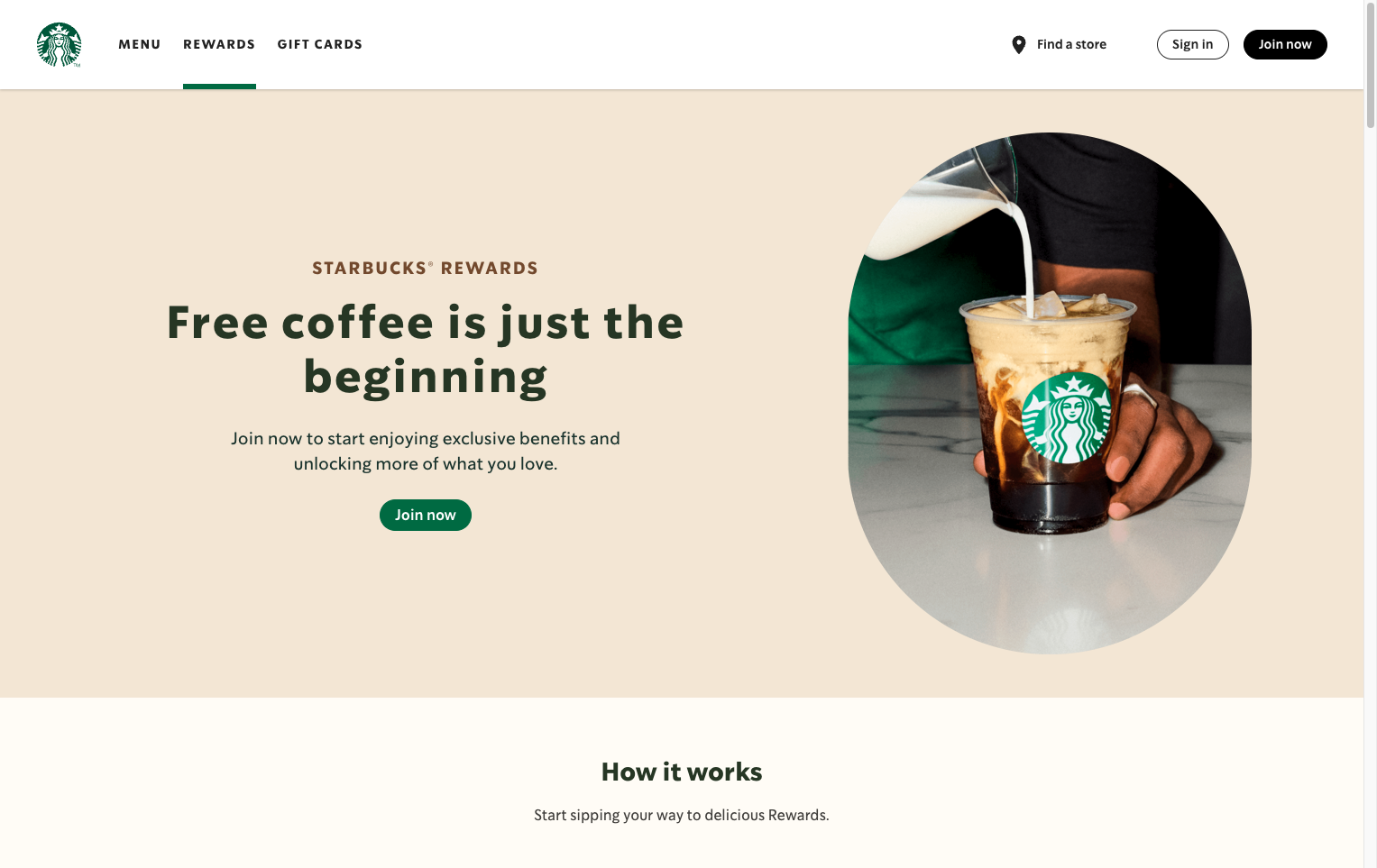
Model: points, app-led offers, and limited-time challenges.
Starbucks Rewards does not ask members to think very hard. The app keeps Stars visible, turns ordinary coffee runs into progress, and gives customers timely bonus opportunities. The value is not only a future free drink. It is the feeling that the next reward is always within reach.
That matters in a category where the customer can make the same purchase somewhere else tomorrow morning. Starbucks uses the program to pull that decision into its app and give the customer a small reason to choose it again.
Borrow the principle: show progress immediately after a qualifying action. Do not bury the balance in an account page. If a customer is close to a reward, say what is left and make the next step believable.
Watch out for: endless bonus offers can train people to wait for discounts. Keep the base value easy to understand, then use challenges to change a specific behavior.
2. REI Co-op: make membership mean something
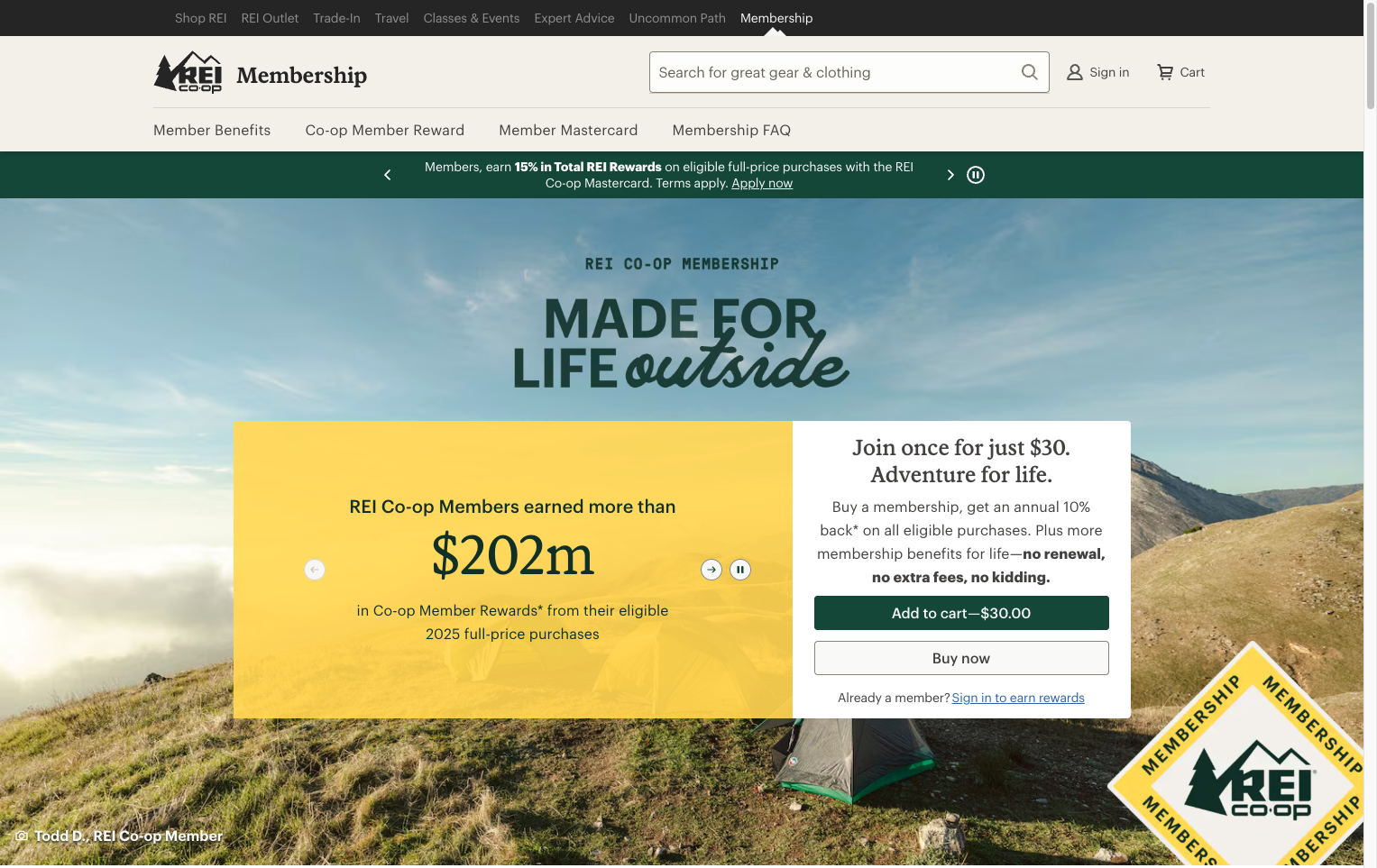
Model: lifetime paid membership built around member value and outdoor identity.
REI Co-op Membership works because the pitch is not “pay us to get coupons.” REI frames membership as joining a co-op, with benefits that connect to the way its customers see themselves and spend time. The program has practical value, but it also gives an outdoor customer a place in the brand’s world.
That is a different job from a high-frequency points program. A one-time membership fee is easier to accept when it feels like an invitation to a relationship, not a toll at checkout.
Borrow the principle: if customers share an identity, build benefits that reinforce it. Useful services, education, events, gear support, and early access can be worth more than another discount code.
Watch out for: a paid membership needs a quick, concrete payoff. Brand affinity will not rescue a vague value proposition.
3. LEGO Insiders: reward the hobby, not only the checkout
Model: points, exclusive rewards, early access, and non-purchase engagement.
LEGO Insiders gives fans points for purchases, set registration, and program activity. Members can redeem points for rewards and coupon codes, while the program also offers early access, member-only rewards, and competitions. That mix matters because LEGO is a hobby, not merely a transaction.
The smart part is the behavior design. A fan who registers a set or joins a member moment is expressing more than purchase intent. LEGO has a reason to recognize that relationship without treating every interaction like a discount request.
Borrow the principle: identify the actions that signal affinity in your category. They might be product registration, a care tutorial, a class, a review, or a collection milestone.
Watch out for: do not add “engagement points” for empty clicks. Reward actions that create customer value or teach you something useful.
4. Sephora Beauty Insider: make status legible
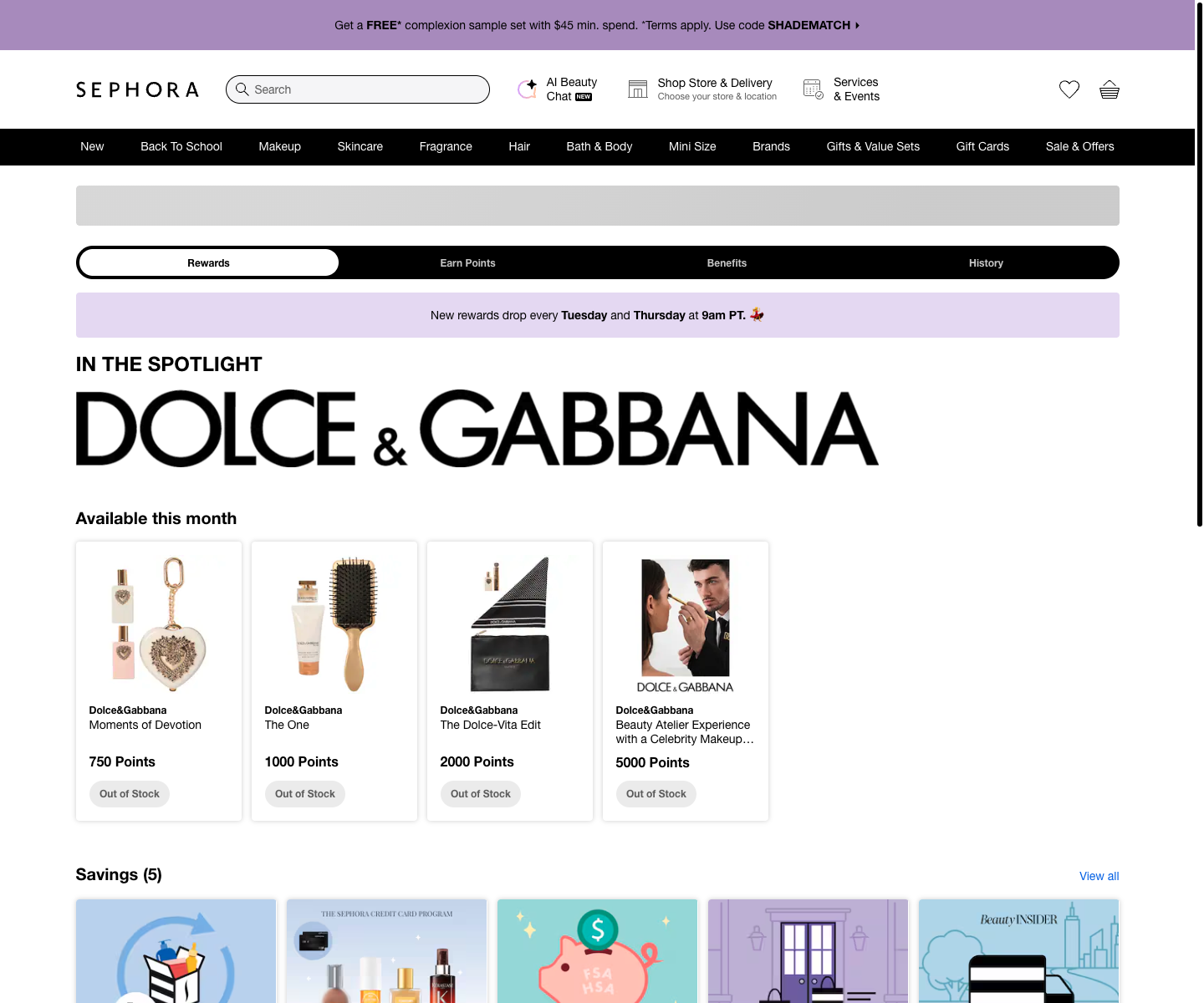
Model: points, tiers, reward choice, and member events.
Sephora Beauty Insider gives beauty customers more than a generic earn-and-burn cycle. The program combines points with tier progression and member benefits, giving both casual buyers and heavier shoppers a reason to pay attention. In beauty, where replenishment sits next to discovery and aspiration, that combination makes sense.
A good tier structure answers three questions without forcing someone into the fine print: what do I get now, what would I get next, and is the climb worth it? Sephora’s program is a useful example of making the top of the ladder visible without making the entry tier feel pointless.
Borrow the principle: publish the ladder. Show the benefit difference, the qualification path, and the next milestone in plain language.
Watch out for: tiers become dead weight when the benefits are too abstract. Priority access, real choice, and moments of recognition travel better than a vague “VIP” label.
5. Ulta Beauty Rewards: keep the value exchange simple
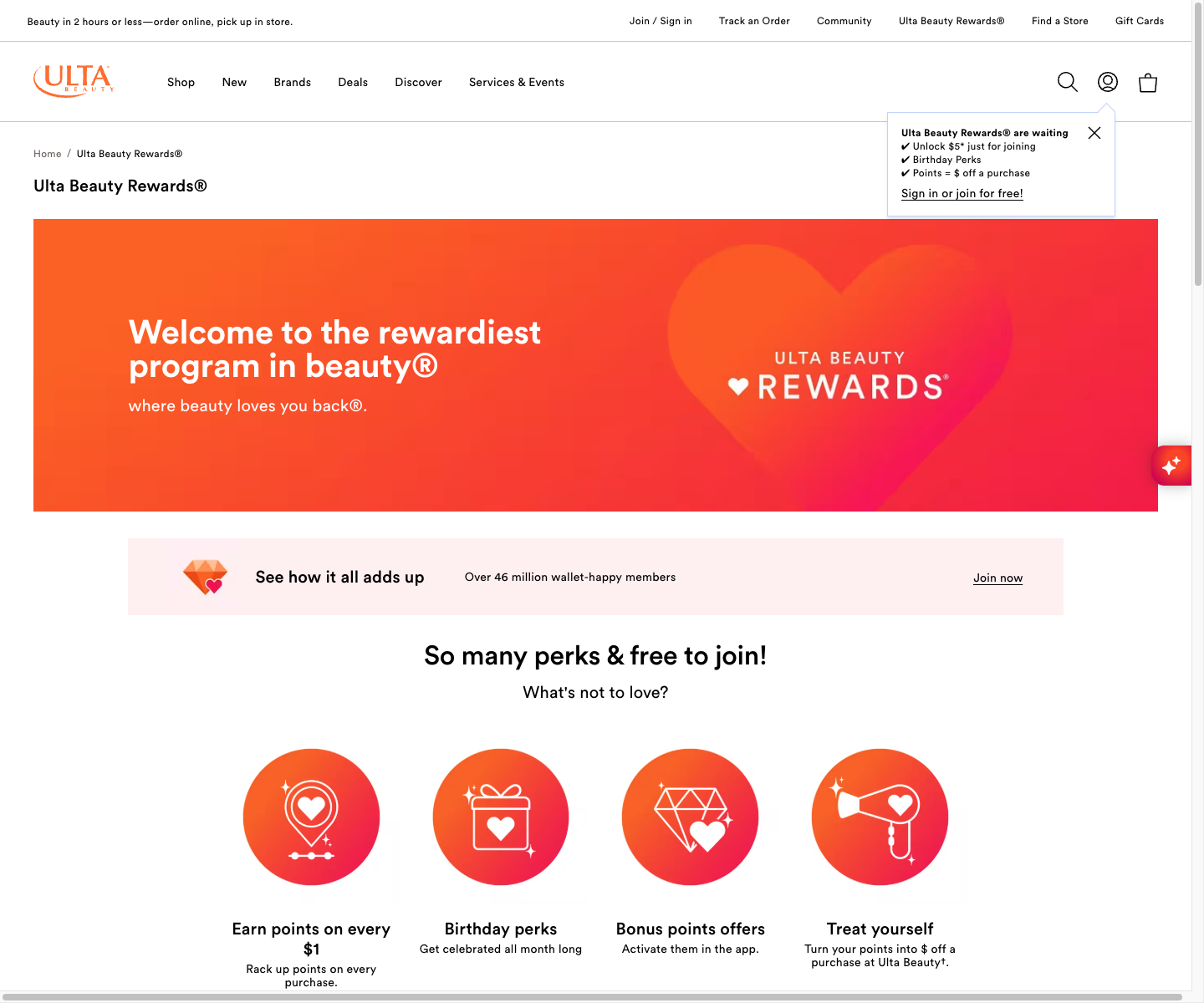
Model: points on spend, bonus-point offers, birthday perks, and tiered benefits.
Ulta Beauty Rewards makes the core exchange easy to explain: customers earn points on purchases and turn those points into dollars off future purchases. Ulta then adds energy with activated bonus-point offers, birthday perks, and higher member levels.
That is a good pattern for categories with regular replenishment. The base program is stable and obvious. Promotional moments can change behavior without making the whole thing feel like a math problem.
Borrow the principle: earn and redemption rules should fit in one sentence. If someone needs a calculator to judge the value, they will stop caring.
Watch out for: do not let bonus mechanics become the only reason to participate. Customers should still see value on an ordinary purchase day.
6. The North Face XPLR Pass: connect purchase to participation
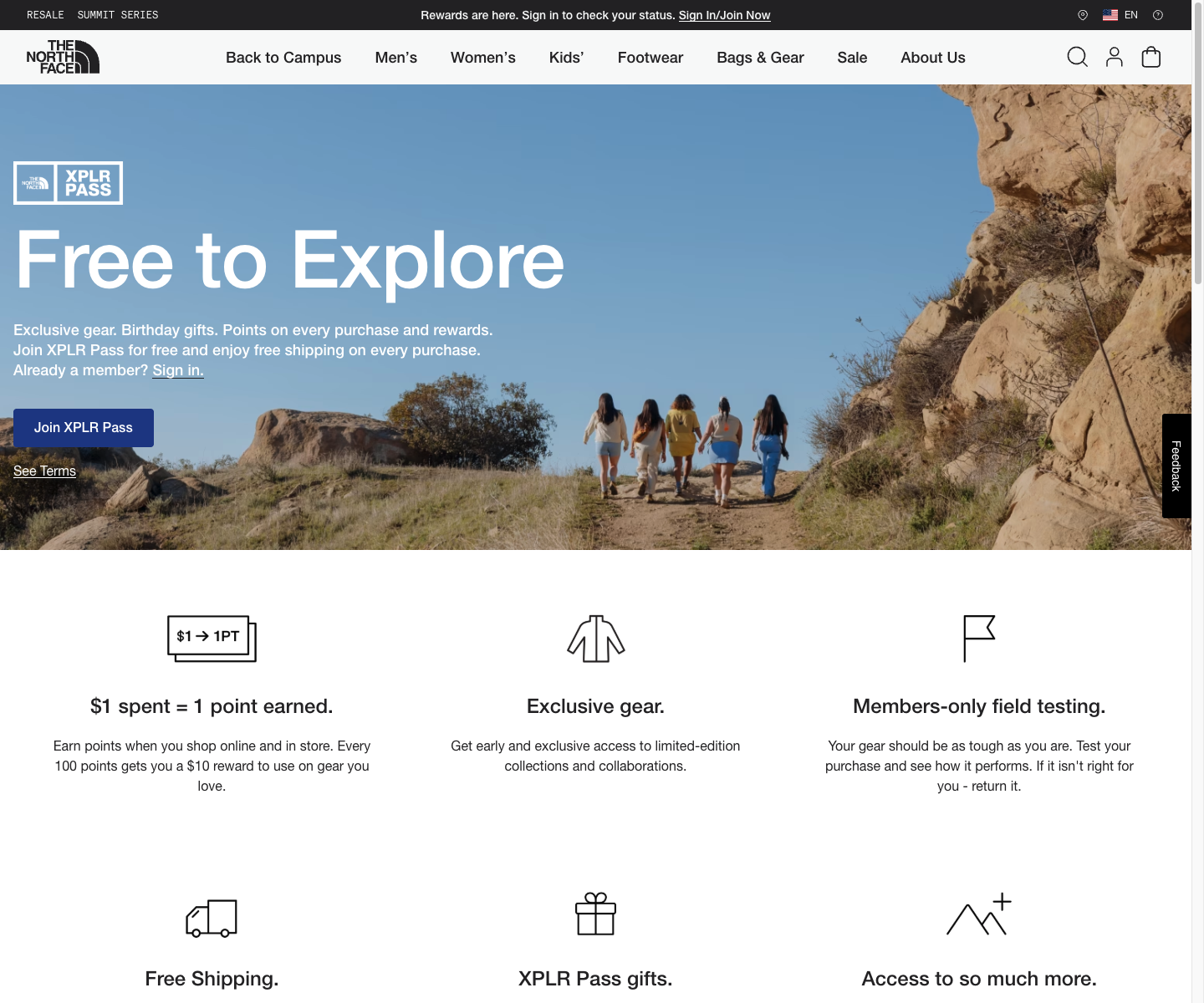
Model: points, member rewards, and outdoor-brand engagement.
The North Face XPLR Pass is built for a brand whose customers care about the activity around the product. The program gives the company room to recognize shopping behavior while keeping the relationship tied to exploration, access, and brand participation.
For an outdoor brand, a loyalty program should not feel like a grocery-store points card in a puffer jacket. The better question is what helps a member get more from the activity: product access, local moments, useful content, service, or recognition.
Borrow the principle: let the reward match the life customers are buying into. If the brand promise is adventure, creativity, performance, or mastery, build the member relationship around that promise.
Watch out for: community language without a member benefit is just copy. Give people a reason to participate.
7. H&M Membership: keep the relationship alive between purchases
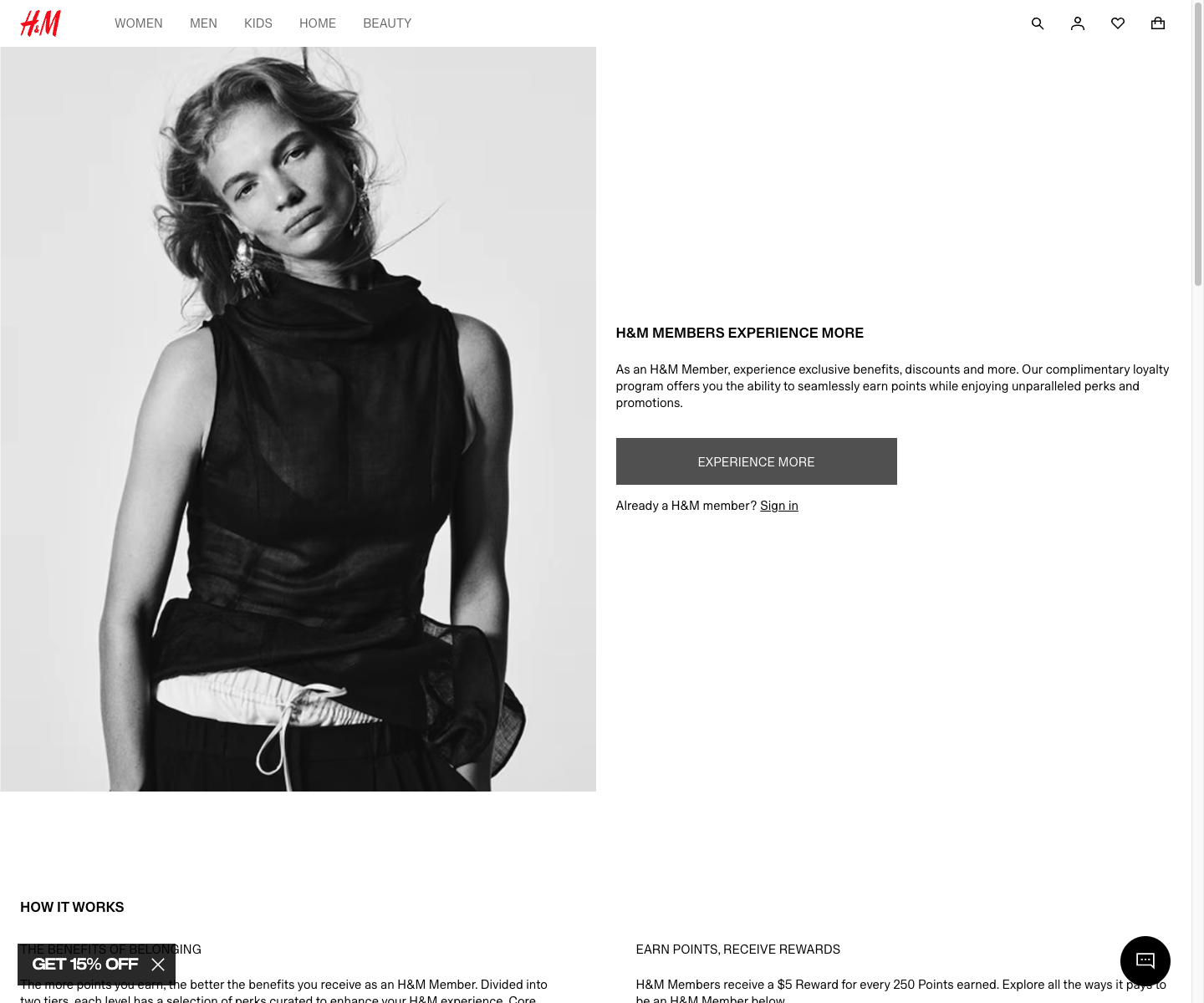
Model: points, offers, member pricing, and mobile-led access.
H&M Membership has to work around uneven shopping patterns. Customers may buy frequently for a stretch, then disappear until a seasonal need or a new collection pulls them back. Membership gives H&M a reason to stay useful in those gaps through points, offers, and member moments.
The lesson is less about fashion specifically and more about timing. Loyalty messages should follow the customer’s natural purchase cycle, not an arbitrary weekly campaign calendar.
Borrow the principle: plan value between orders. Early collection access, care guidance, personalized inspiration, and relevant reminders can keep a relationship warm without forcing another discount.
Watch out for: if every message is a sale, membership becomes another promo list. Give members information or access that is worth opening.
8. Petco Perks: build around the customer’s recurring responsibility
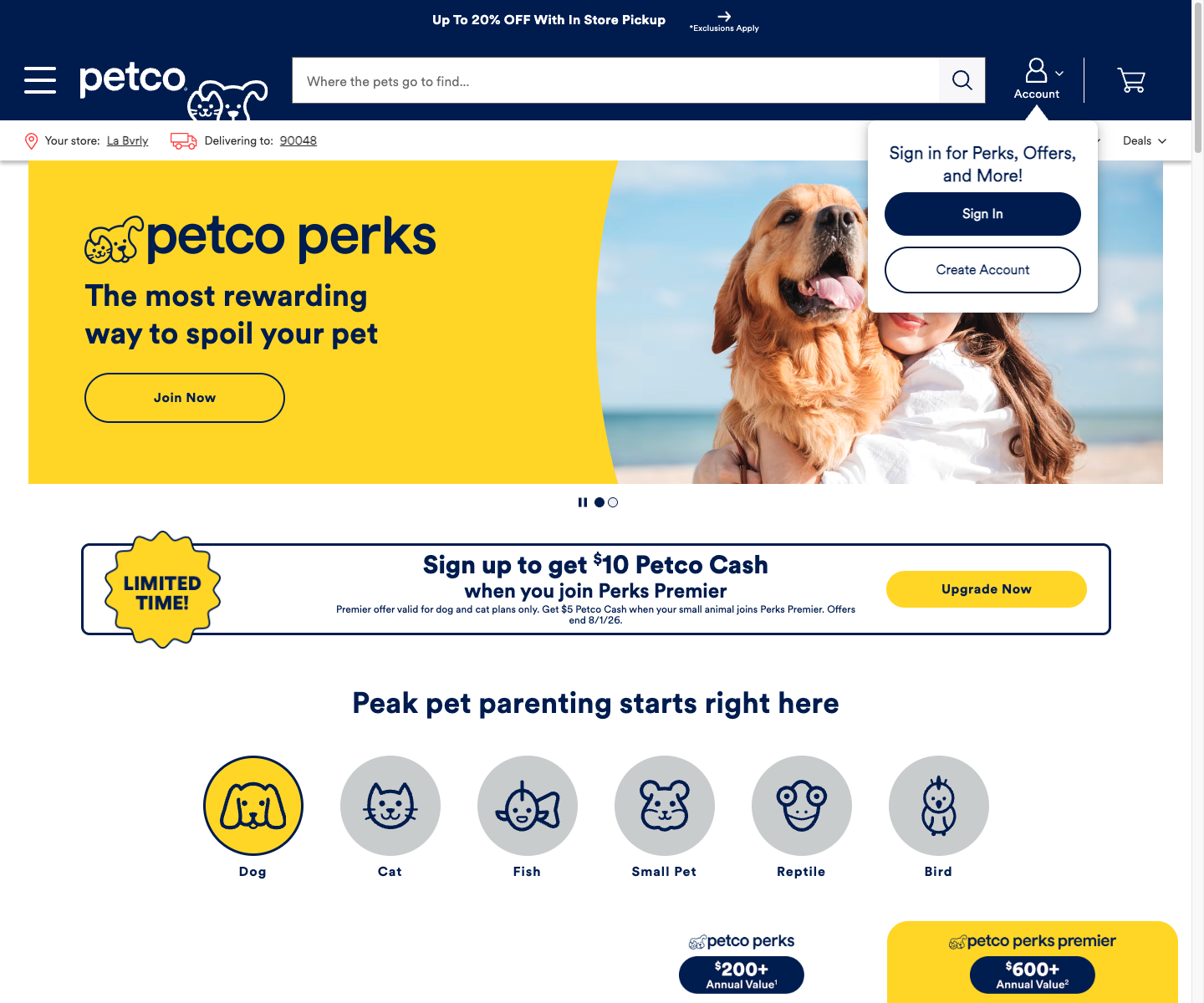
Model: free rewards with a paid Premier membership path.
Petco Perks fits an ongoing job customers already have: caring for a pet. The free tier gives customers a low-friction way to earn rewards and access member value, while Premier gives more committed pet parents a paid path with recurring benefits. The program does not need to invent a fictional reason for someone to return. The care cycle already exists.
This is especially relevant for brands with maintenance, replenishment, service, or scheduled-care behavior. A free-to-paid ladder can work when the upgrade makes the next month of a customer’s life easier, not merely one big purchase cheaper.
Borrow the principle: map the customer’s recurring need first. Then give casual customers a useful start and frequent customers a clear reason to upgrade.
Watch out for: a paid plan cannot survive on theoretical savings. The rules, exclusions, and payoff window need to be painfully clear.
9. Madewell Insider: give a fashion relationship more than one signal
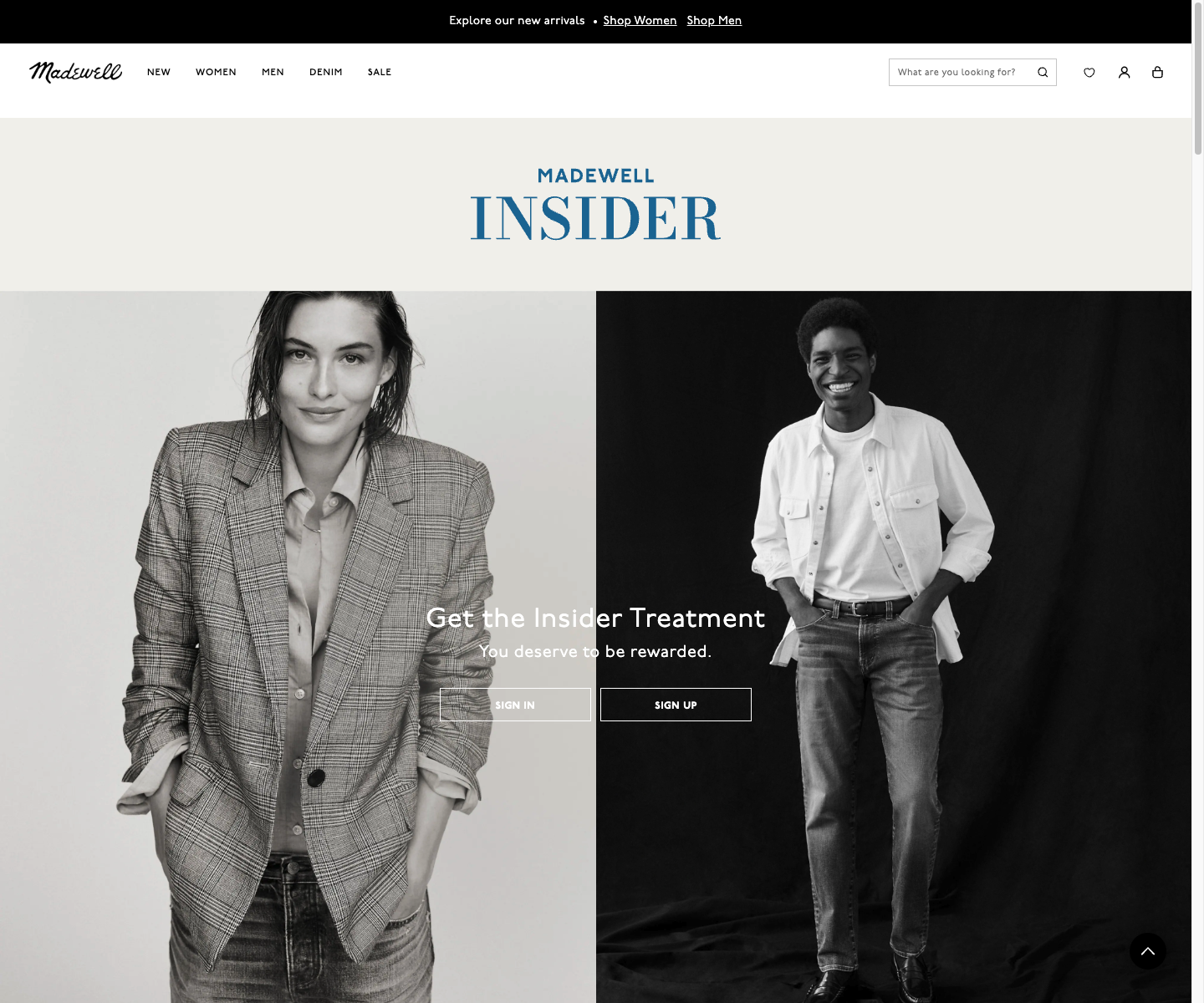
Model: tiered member relationship with shopping and brand-led behaviors.
Madewell Insider is a good reminder that fashion loyalty does not have to be a pure discount engine. The relationship can include membership benefits, tier recognition, and actions that fit the brand’s point of view, such as reuse or recycling initiatives where offered.
That matters because apparel customers are not all equally promotional. Some are looking for a deal, some want styling confidence, and some want a closer relationship with a brand they already identify with. A useful program gives those customers more than one reason to stay engaged.
Borrow the principle: reward behavior that supports your actual brand model, not just spend. If circularity, service, education, or product care matters, give it a place in the program.
Watch out for: do not use a values-based action as empty loyalty theater. The benefit and the customer outcome both need to be real.
10. Nike Membership: make access the benefit
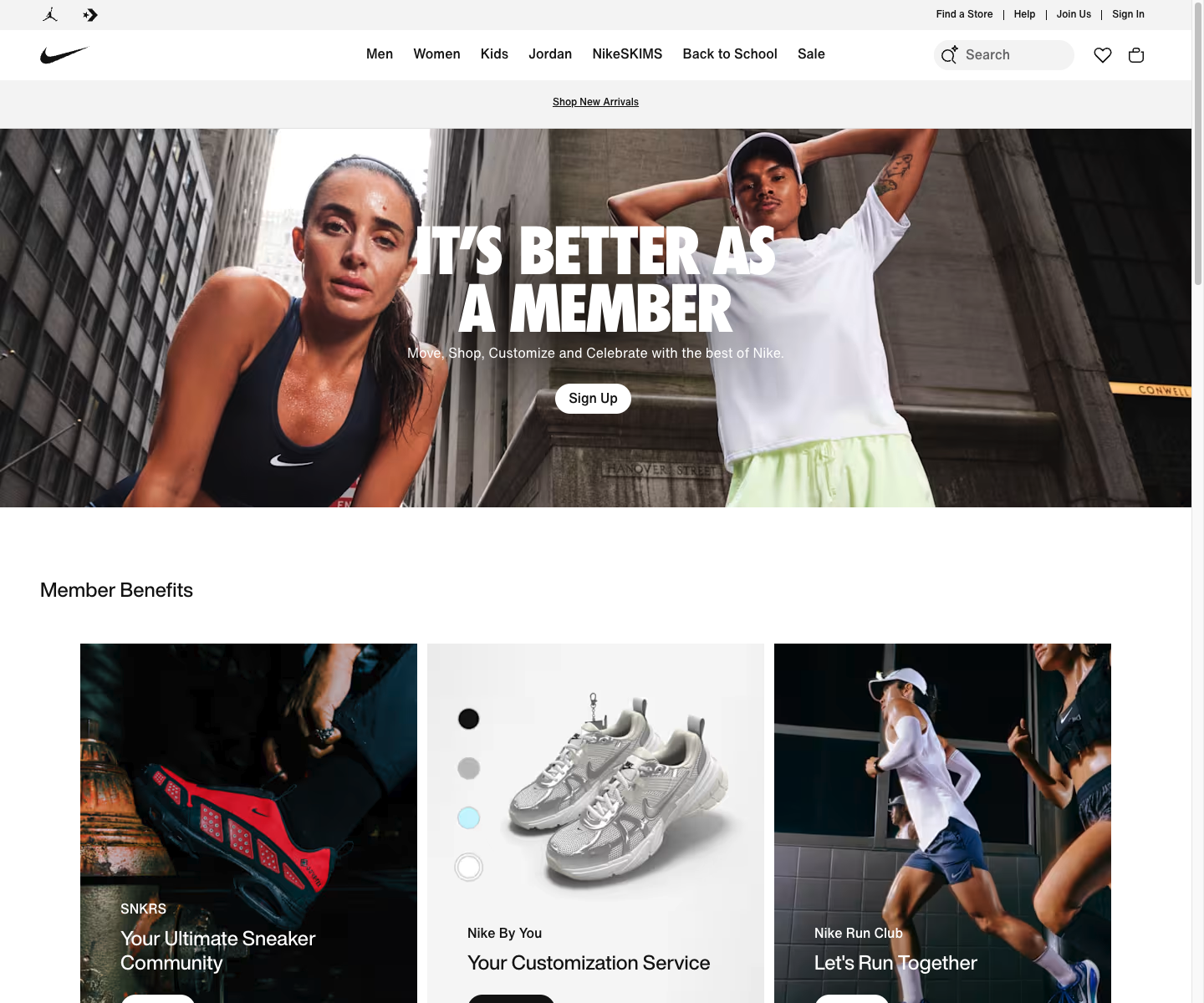
Model: free membership, exclusive products, apps, services, and member-only experiences.
Nike Membership is the cleanest counterexample to “every loyalty program needs points.” Nike presents membership as access to products, experiences, apps, services, and practical benefits such as shipping and returns. The value lives in getting closer to the brand, not building a balance for its own sake.
This works when a brand has genuine access to offer: product drops, expertise, content, appointments, events, or a member service layer. It is not a shortcut for brands with nothing distinct to unlock.
Borrow the principle: ask what a member could get that a non-member cannot. If the answer is meaningful, access may beat a complicated points catalog.
Watch out for: “exclusive” stops working when everyone gets the same thing two days later. Protect the moments that make membership feel real.
11. Target Circle: make relevance the reward
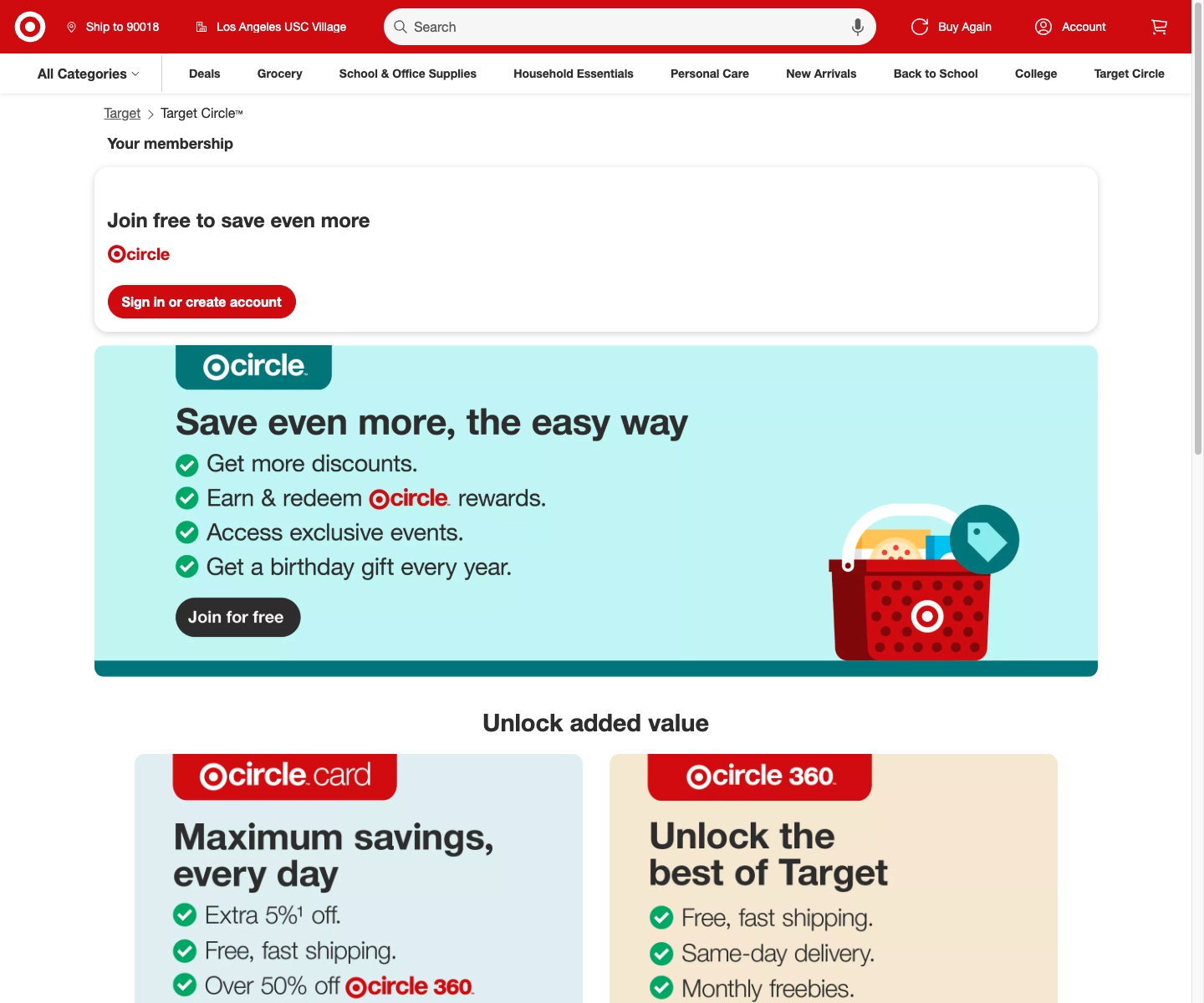
Model: member savings and personalized everyday offers.
Target Circle is built for a broad basket and frequent trips. The value is useful because it is close to the next purchase decision. Instead of asking customers to wait for one distant reward, the program can surface offers that connect to the categories they actually buy.
That is an important distinction. A smaller offer with good timing can matter more than a larger reward that arrives after the customer has already bought elsewhere.
Borrow the principle: use customer data to improve relevance, not to prove you have customer data. Start with behavior your customer can recognize: replenishment timing, preferred categories, or a stated preference.
Watch out for: personalization that feels random or overfamiliar burns trust fast. Keep the logic useful and transparent.
12. CVS ExtraCare: design for the repeat-visit rhythm
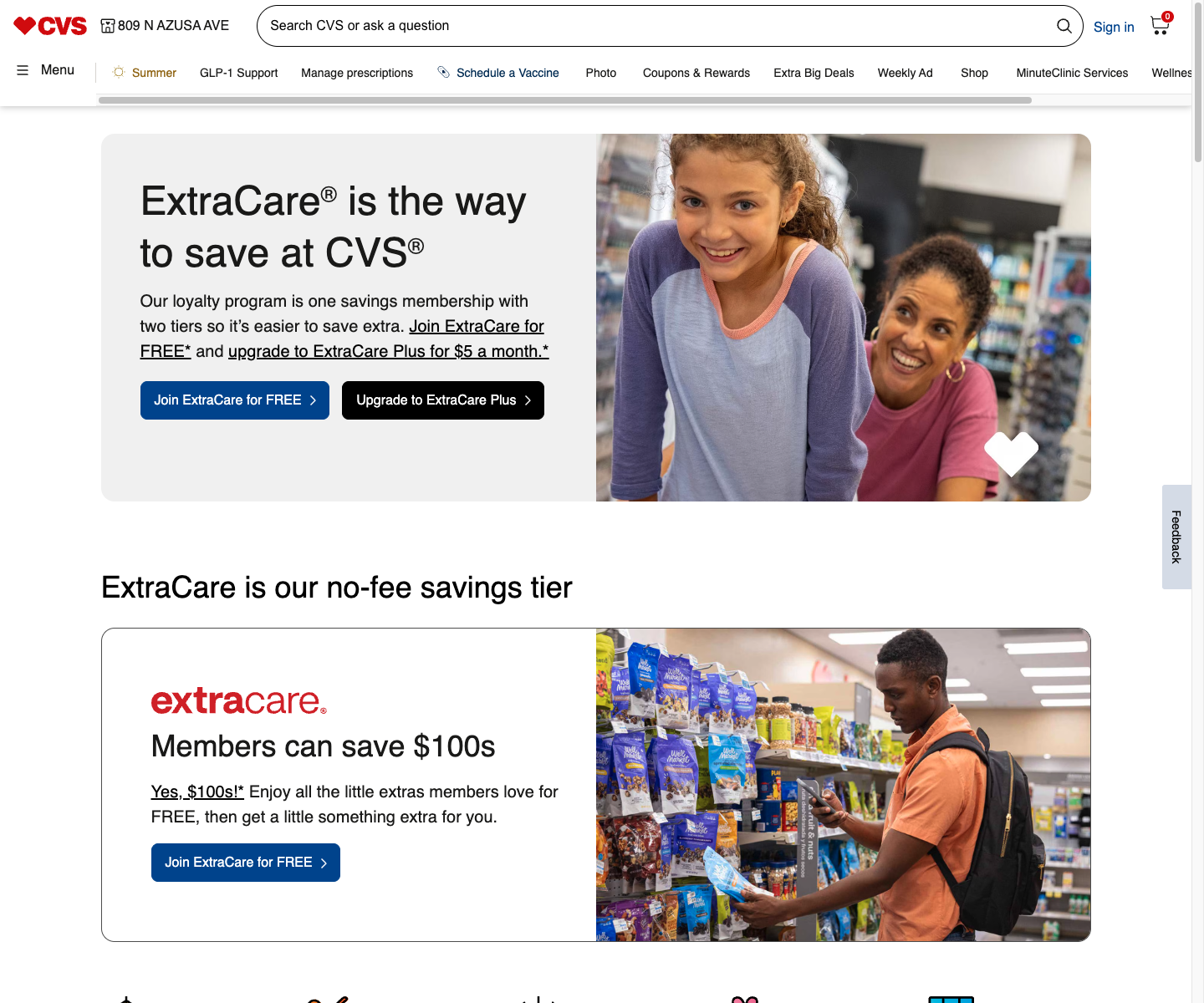
Model: savings and offers that support frequent retail behavior.
CVS ExtraCare fits a category built around regular trips, refills, and practical needs. Its loyalty opportunity is not to create a luxury moment. It is to make CVS the default choice when a customer needs something again.
That makes it a strong lesson in cadence. A program should show up just before a customer needs to make a choice, not only after the purchase is over. The right reward can be modest if it reaches the person at the exact moment it can change where they go.
Borrow the principle: find the real replacement or refill interval in your category. Trigger messages around that window, then test whether the program changes the next purchase.
Watch out for: do not confuse a high open rate with loyalty. Measure whether the program actually changes repeat behavior or share of wallet.
13. Barnes & Noble: give casual and committed customers different paths
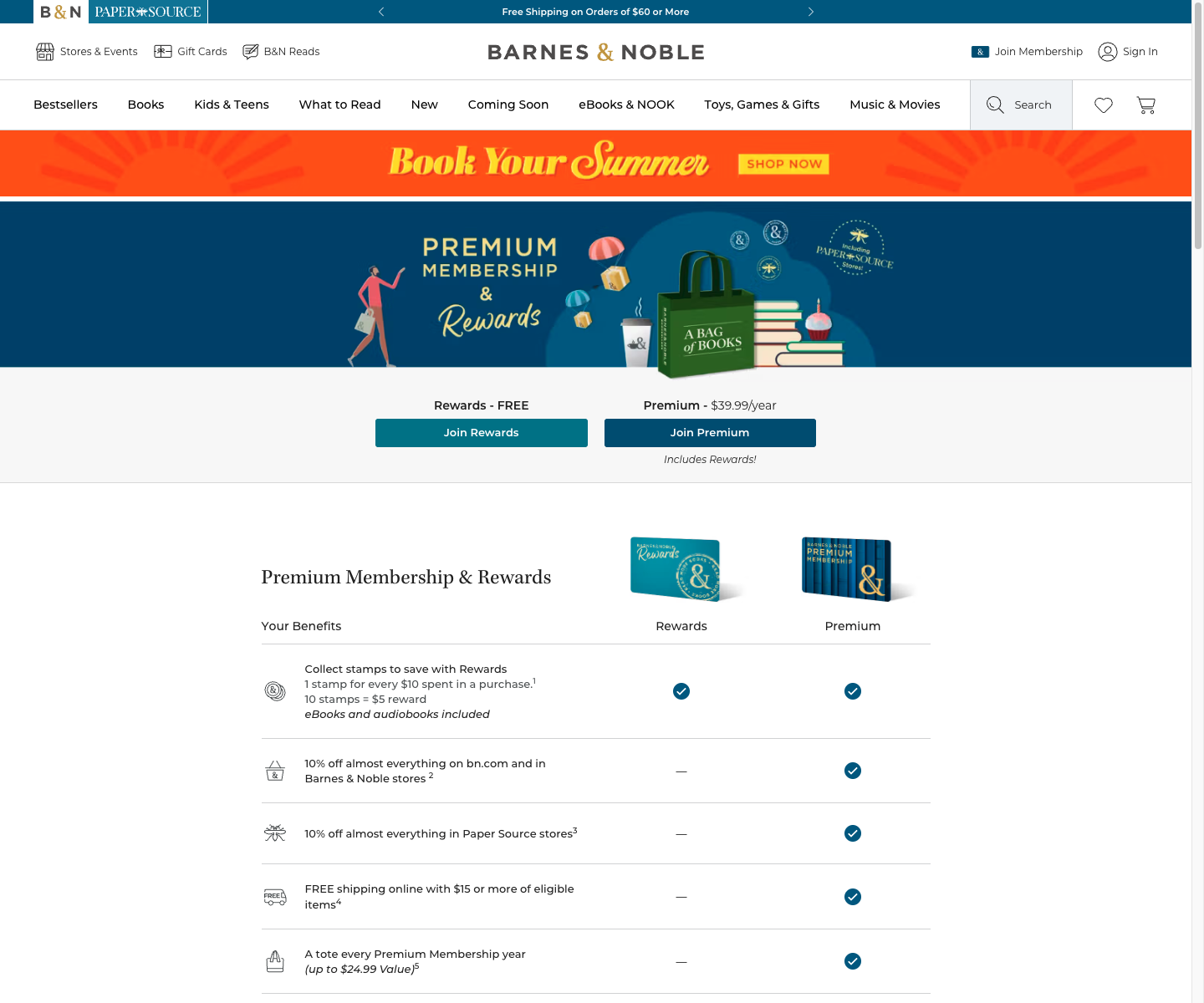
Model: free rewards alongside a paid Premium membership.
Barnes & Noble Rewards and Premium membership recognize a basic customer truth: the occasional gift buyer and the serious reader should not be forced into the same commitment level. A free path lowers the barrier to joining, while a paid option gives frequent buyers a reason to step up.
That structure is helpful for brands with a mixed audience. You can collect permission and build a relationship with a casual customer without overpromising. Then, once someone demonstrates repeat value, you have a clear upgrade conversation.
Borrow the principle: create a useful first rung and an obvious reason to climb. The paid version should solve a frequent customer’s problem better, not merely add a fancier name.
Watch out for: a free program that has no value becomes a data-capture form. Give it a real benefit from the start.
14. The Nordy Club: pair earned value with better treatment
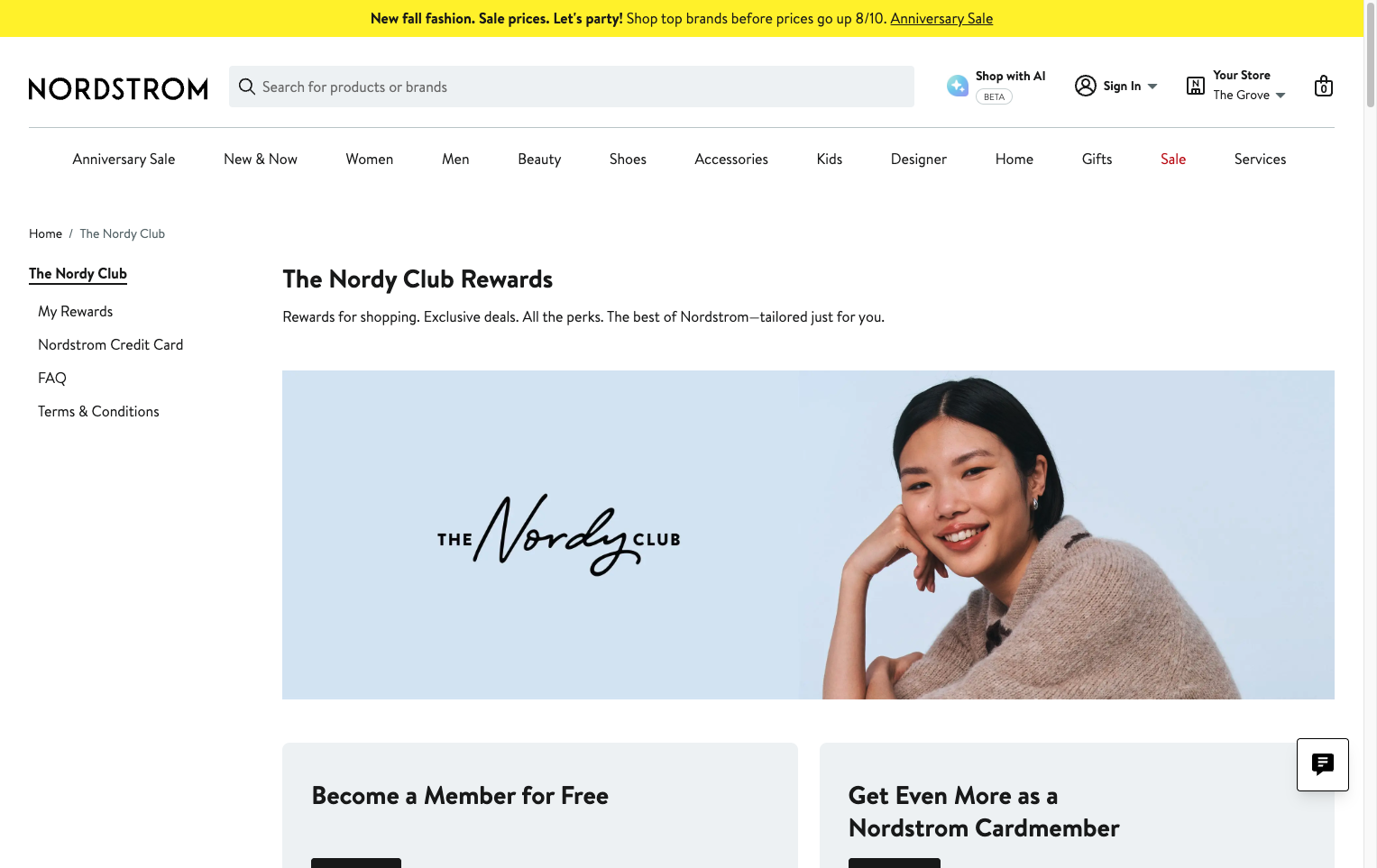
Model: points, tiers, and service-oriented benefits.
The Nordy Club is more interesting than a standard points program because Nordstrom can pair earned value with a service relationship. In higher-consideration retail, customers may care about styling, alterations, events, and recognition alongside any reward currency.
That is the right shape for brands whose customer experience is part of why people pay more. The loyalty layer should make a good customer feel known. It should not turn a considered purchase into a race for coupon codes.
Borrow the principle: make your best existing experience more available to good customers. If expertise or service is part of the product, build member benefits around it.
Watch out for: service perks have an operational cost. Do not promise priority treatment unless stores, support, and fulfillment can actually deliver it.
15. IKEA Family: member pricing can be enough
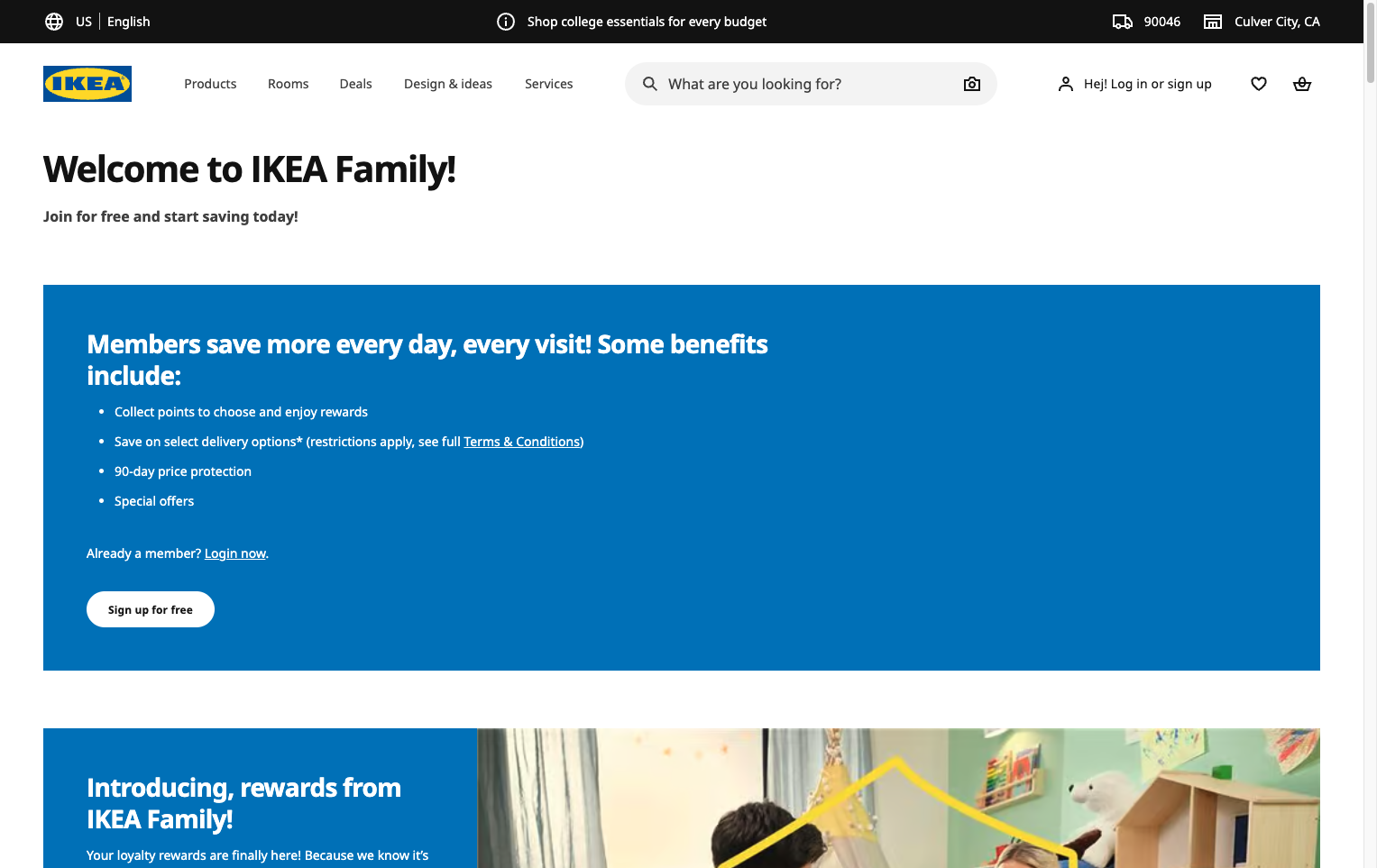
Model: free membership, member prices, and practical access.
IKEA Family shows that a loyalty program does not need a points balance to work. Member pricing and access are easy to understand, especially in a category where customers are planning rooms, projects, and bigger purchases. The benefit is present at the moment the customer is making a decision.
That simplicity is a feature. A program earns its keep when the customer can see why membership matters without studying a reward chart.
Borrow the principle: if you have a strong price or access advantage to offer, make joining the bridge to that value. Do not add points just because every other program has them.
Watch out for: member pricing needs enough breadth to feel dependable. One random deal does not create a membership habit.
How to choose the right loyalty model
Start with the customer economics, not the trendiest mechanic.
Frequent, low-margin purchases
Use immediate, easy-to-track value. Points, relevant offers, and short reward windows can work well.
Long gaps between purchases
Give customers a reason to stay connected between orders. Access, education, care content, and seasonal moments can carry the relationship.
Strong identity or community
Reward participation, not only spend. Early access and experiences are often more defensible than another discount.
Recurring care or service
Consider a paid model only when it makes the ongoing job easier or more valuable.
Mixed customer value
Use a free entry point and a real upgrade path. Do not ask a casual customer to commit like your best buyer on day one.
The loyalty program design checklist
Enrollment
Give customers a reason to join now, not a vague promise of future perks.
First value
Make the first reward, benefit, or useful message arrive quickly enough to prove the program is real.
Earning behavior
Reward the actions that matter to your business and your customer, not every available click.
Redemption
Make the value easy to find and easy to use. A reward that expires unused is not a win.
Recognition
Show customers their status, progress, and next milestone in the places they already visit.
Lifecycle
Build a message plan around real customer moments: first purchase, replenishment, lapse risk, birthday, tier change, and seasonal need.
Measurement
Compare member behavior with a credible non-member or holdout group. Revenue from members is not automatically incremental revenue.
Where referral fits
Loyalty rewards customers for coming back. Referral gives them a reason to bring someone new. The programs work best when they are coordinated, not stacked into one confusing pile of incentives.
Use loyalty data to decide who should see a referral invitation. Customers who have redeemed a reward, reached a tier, or made a repeat purchase are often in a better position to advocate than someone who joined yesterday. Keep the referral reward distinct from the loyalty currency unless the customer can understand exactly what happens next.
Then measure the full loop: who shares, who converts, whether referred customers become repeat buyers, and whether advocacy changes retention for the advocate. That gives you a real operating model instead of two disconnected promotions.
Ready to build a referral program your customers want to share? Let’s talk.
Frequently asked questions
What makes a customer loyalty program successful?
A successful program gives customers a clear reason to join, a quick first benefit, and useful value that matches how they shop. It also needs simple rules and reliable delivery.
Are paid loyalty programs worth it?
They can be when customers have recurring needs and can quickly see a practical return from the membership. A paid program is a poor fit when the benefit is vague or too far in the future.
Do loyalty programs need points?
No. Member pricing, early access, services, experiences, and useful recognition can be stronger than points when they fit the brand and customer better.
How should loyalty and referral programs work together?
Use loyalty signals to identify customers who are ready to advocate, keep reward rules clear, and measure the impact on both acquisition and repeat purchase.